

NaîtrE des aBysses Irrévocables
de Joanie Turmel
le 23 juin 2026

Source : Unsplash.com
Les larmes coulent sur mes cernes creux et violacés avant de s’arrêter sur la tête frêle de mon bébé naissant. Je regarde ma petite Hope. Elle est si petite. DING-DING-DING. La tablette numérique de ma chambre d’hôpital fait un bruit strident, puis une voix robotisée s’élève : « Réception d’un message ». Je saisis l’appareil d’une main tremblante, hésitante à découvrir son contenu. L’écran indique : « Hope Tremblay. Née le 22 juillet 2115. Résultats des tests ». Après quelques secondes d’hésitation, j’appuie sur « Entendre le message vocal ». La voix annonce « Bonjour. Les résultats des tests de Hope démontrent qu’elle présente une anomalie gastro-intestinale et un très faible poids. Elle aurait été exposée à une bactérie d’origine hydrique pendant la grossesse non détectée en phase prénatale. Ces cas sont en augmentation. Le centre Parents-Enfants de l’Hôpital Nebi de Beauce vous soutient ». La voix cesse abruptement, puis un message apparait : « Si vous avez des questions, inscrivez-les dans l’encadré ci-dessous ».
La tête baissée, mon torrent de larmes se déverse sur le visage frêle de ma fille comme une rivière qui sort de son nid au printemps. Même cette expression est désuète, les inondations dévastatrices survenant désormais à tout moment. J’aurais dû m’y attendre. Les décès in utero et infantiles et les problèmes de développement et de santé chez les enfants s’accroissent partout dans le monde, notamment en raison de la diminution de la qualité et quantité de l’eau.
Mon regard fuyant s’accroche au téléviseur qui affiche le grand titre « La crise mondiale de l’eau fait des ravages ». Les images qui défilent sous mes yeux me poignardent en plein cœur. Des vols de nourriture et d’eau potable se perpétuant dans les champs agricoles et les puits privés, des villages fermés par manque de ressources et des centaines de personnes malades ou décédées après avoir consommé de l’eau contaminée ou par manque d’accès aux soins et ressources essentielles. Les enfants sont démesurément touchés, des enfants comme Hope… Mon bébé, je n’aurais jamais dû boire cette eau qui t'a rendue malade. N’est-ce pas plutôt nous, les êtres humains, qui avons rendu l’eau malade avec notre nombrilisme collectif persistant? Maudite société, je te haïs !!! Les yeux à nouveau inondés, je regarde ma fille dans mes bras et je lui confie : « Je n’ai pas eu le choix de boire cette eau mon bébé, c’était la seule que j’avais. La chaleur était si forte, constante et accablante… Je n’avais pas le choix, pour toi, pour nous ». L’eau potable, si précieuse et si rare, est devenue une richesse destructrice. Elle est traquée comme les chats chassent les souris et nous oblige à jouer quotidiennement à la roulette russe.
Fixant toujours ma fille, je lui susurre : « Hope, pourquoi personne n’a compris qu’il faut aimer et prendre soin des ressources comme je me promets de le faire avec toi? » Des cris me font soudainement sursauter. J’accours vers la fenêtre, mon bébé toujours en sécurité au creux de mes bras. À travers le smog épais, j’aperçois des centaines de personnes, surtout des femmes âgées ou racisées, marchant vers un bâtiment protégé par des hommes armés. L’insigne indique « Ravitaillement en eau potable ». Des individus privilégiés, protégés par des gardes, dépassent la file de personnes impatientes. Des gens se poussent, crient et pleurent. Des chiens jappent, gémissent ou sont couchés, immobiles et faibles. Je ferme les yeux et des larmes inondent à nouveau mes joues. Hope, j’espérais mieux pour toi, pour nous, pour les animaux, pour l’environnement. Pourquoi personne n’a compris que nous formons un tout avec ce qui nous entoure? Que l’eau, les plantes, les animaux, les êtres humains et les autres membres de notre écosystème sont égaux? Que la survie des uns dépend de la survie des autres? Ce n’est pas seulement la crise de l’eau, c’est la déchéance collective générée par l’anthropocentrisme historique. Qu’avons-nous fait, Hope…
« Maman! Réveille-toi! » Les images de l’hôpital et les cris se dissipent, remplacés par le chant des oiseaux et une lumière aveuglante qui transperce mes paupières. Des brins d’herbe chatouillent mes pieds et le soleil cuisant me percute la peau. Une goutte de sueur glisse sur ma tempe pour rejoindre les larmes coulant encore sur mes joues. J’ouvre doucement les yeux, heureuse de constater qu’il ne s’agissait que d’un cauchemar. Au loin, Hope souriante me fait signe de la main avant de partager délicatement un peu d’eau avec sa sœur Adèle, une chèvre de notre communauté. Elle accourt ensuite rejoindre les enfants de sa classe qui cueillent des petits fruits avec leur enseignant. Une autre goutte de sueur perle sur mon front. Les journées de 40°C sont très fréquentes, mais on s’adapte, ensemble. Je prends une gorgée d’eau qui descend doucement dans ma gorge. Je ferme les yeux pour la savourer et je la remercie de me permettre de (sur)vivre.
Mes yeux s’ouvrent sur ma fille. 20 juillet 2123, 8 ans déjà. Hope, ton nom est bien choisi : il représente l’espoir que des relations réciproques, durables et respectueuses continuent d’être entretenues entre les êtres vivants et inanimés. Je remercie les générations précédentes d’avoir choisi la voie d’un mode de vie plus durable malgré les résistances et bouleversements. Une crise a d’ailleurs constitué un moment charnière de cette transition, soit le bris majeur de la station d’épuration de notre territoire survenu en 2027 en période d’étiage. Cet événement, expliqué par les sous-investissements chroniques et la surcharge du réseau dû à la surconsommation d’eau, a entrainé une contamination environnementale importante, une pénurie d’eau potable persistante et le décès de centaines d’êtres aquatiques. Plutôt que de s’apitoyer, mon arrière-grand-mère, Marilou, et plusieurs autres jeunes leaders se sont regroupés pour mobiliser la communauté locale autour d’un mode de vie plus durable et équitable. Leurs actions ont notamment permis de collectivement réduire la surconsommation, créer des jardins collectifs et nettoyer régulièrement les berges, améliorant graduellement la santé des écosystèmes et inspirant tout le Québec. Marilou, croyant fermement en l’importance d’agir collectivement pour une transition socioécologique juste et équitable, s’est impliquée politiquement et est devenue première ministre du Québec! Cette transition s’est donc effectuée graduellement et nous en ressentons aujourd’hui les bénéfices. Tu peux être fière de tes ancêtres Hope! Moi, je le suis!
Toutefois, des questions demeurent. Continuerons-nous dans ta voie Marilou? Mon rêve était-il réellement un cauchemar? Était-il plutôt un vécu parallèle représentant ce qu’aurait été notre existence si des choix anthropocentriques avaient continué d’être préconisés? S’agissait-il d’un rêve prémonitoire? Un retour vers un mode de vie néocapitaliste peut si vite arriver. Devons-nous nous y préparer?
Épilogue
Le titre de la nouvelle a été longuement réfléchi. Inspiré d’un acrostiche, les lettres majuscules forment le mot « NEBI » qui réfère au nom de l’hôpital utilisé dans la nouvelle et qui signifie « eau » en langue abénakise (Conseil des Abénakis de Wôlinak, 2024). Le peuple abénakis est celui qui a occupé le territoire sur lequel se déroule l’histoire, la Beauce, avant que les colons s’y installent. En plus d’avoir pour but de reconnaître l’héritage de ce peuple, le terme « Nebi » est aussi utilisé pour symboliser l’importance de traiter les êtres animés et inanimés avec réciprocité et respect en cohérence avec les valeurs et principes autochtones. Le terme « abysse » symbolise quant à lui l’eau dans son sens large qui occupe une place prédominante dans la nouvelle. Ce concept réfère aussi à l’influence des choix profonds et fondamentaux des générations actuelles et passées sur les générations futures.
Références
Conseil des Abénakis de Wôlinak. (2024). Dictionnaire de la langue abénakise. Conseil des Abénakis de Wôlinak. https://dictionnaireabenakis.com/mot/eau/
Your local ecohealth Gossip Guru
Spotted: Your Landlord, Quietly Hoping You Don’t Read the Coroner’s Report
by Carla Hamilton
June 23, 2026
 Six hundred and nineteen individuals died in their apartments in one week in 2021 (BC Coroners Service, 2022). Hello, Lower Mainland. Did you miss me? Let's talk.
Let me set the scene. It's the second-to-last week of June. The sky over Vancouver is milky white with a cloudless blue behind it. Your bedroom, the only room that you have, is 38 degrees and climbing. You open the window. The air outside is hotter than the air inside. You close your window. Your landlord, who lives in Point Grey with a beautiful shaded yard and a heat pump, will never face this problem. You, dear reader, are living it. Unfortunately, the province has had four years to fix it. But here is the thing no one wants to admit: the 2021 heat dome wasn't just a weather event. It was a housing event. And the next one is already on the calendar. Environment and Climate Change Canada is forecasting that 2026 will be among the hottest years on record and that the period from 2026 to 2030 will likely be the hottest five-year period ever recorded (Environment and Climate Change Canada, 2026).
The proof is public. 619 deaths were deemed attributable to the 2021 heat dome (BC Coroners Service, 2022). Most of those who passed were older adults with chronic health conditions who lived alone. Ninety-three per cent had no air conditioning. Seventy-six per cent did not even own a fan. All but two percent of deaths occurred indoors, with roughly a third living in marginalized communities and three-quarters in Fraser Health or Vancouver Coastal Health regions, making this issue local to you (BC Coroners Service, 2022). The killer wasn't the heat. The killer was the building. This is precisely what ecosystem approaches to health are trying to highlight. The ecohealth framework incorporates systems thinking, transdisciplinarity, equity, sustainability, multi-stakeholder participation, and the belief that knowledge should drive action (Charron, 2012; Webb et al., 2010). Ecohealth creates a bridge between the environment and human health, as well as between the climate crisis, the housing crisis, and the public health crisis. These are all one crisis. Climate change produces the rising temperatures. Decades-old housing policies supply the buildings. Income inequality fosters the people who could not afford to leave these conditions. Ageism, ableism, and isolation produce the framing that lets us see these as "vulnerable populations" instead of "us, in thirty years."
The theme this gossip blog centres on is Collectives of reciprocity: land and health. Reciprocity remains the aspect that we continue to leave behind. The land continues to give back and support us through the rivers, the rain, and the cool winds that travel in from the ocean. We took the shade and canopy that the land has supplied and distributed it unequally: in Vancouver, tree canopy is far sparser in low-income and racialized neighbourhoods, with some Canadian communities having 20 to 30 percent less canopy cover than wealthier ones (Nature Canada, 2022). Tree canopy becomes a privilege, while asphalt becomes a burden placed on our most vulnerable. That is not the land's choice. That is ours. And it wasn't only humans who suffered. An estimated one billion intertidal animals, mussels, clams, and sea stars were cooked to death along the Salish Sea, where shoreline temperatures climbed above 50 degrees (CBC News, 2021). Swifts, herons, and soil microbes were all in this crisis with us. Ecohealth challenges the belief that only human deaths count as a health emergency (Charron, 2012). Here is where the gossip gets juicy. The BC Building Code was silently updated in 2024: all new homes are now required to have at least one space that will not exceed 26 degrees (Government of British Columbia, 2024). However, the update only applies to new buildings, which is a detail that has been quietly buried. It excludes the existing buildings where vulnerable low-income renters already live, leaving them at risk unless their homes are retrofitted (Metro Vancouver, 2025).
Landlords say retrofits are too expensive. The province says it cannot create change as quickly as needed. Both of these opinions have merit. But retrofits are still less expensive than 619 funerals. Ecohealth refuses to let knowledge sit in silence (Parkes et al., 2019), so here is my stand: cooling is public health infrastructure, and the province needs to recognize it as such. That means a maximum indoor temperature standard for all rentals in BC, new and existing, must be implemented. It means tenant rights should allow individuals to install cooling measures without landlords' objection. It means heat pumps should be subsidized in low-income buildings and social housing. It means recognizing tree canopies, wetlands, and ecological restoration in neighbourhoods in need as cooling infrastructure too, not just as amenities. The low-income neighbourhoods with the highest heat-related mortality rates rarely have the green space and tree canopy that would give them a chance against rising temperatures. We should not overlook the tenants in SROs, the disabled community, our elderly, and vulnerable populations. They should be included within the decision-making processes that directly impact them. They represent the lived experiences that the coroners' reports cannot illustrate. Ecohealth fosters the belief that knowledge flows in both directions, between the community and the researcher (Charron, 2012). Any cooling policy that doesn't begin with their needs isn't policy. It's paperwork.
The heat is already returning to Vancouver. Tell me in the comments: What is the temperature in your apartment right now? Tag your MLA. Send this blog to your landlord. Or don't. Either way, we must address this climate and housing issue; otherwise, we will face the same situation again and pretend to be surprised once more.
You know you love me.
XOXO
Gossip Gurl, Public Health Edition
References
BC Coroners Service. (2022). Extreme heat and human mortality: A review of heat-related deaths in B.C. in summer 2021. Government of British Columbia. https://www2.gov.bc.ca/gov/content/life-events/death/coroners-service/death-review-panel
CBC News. (2021, July 6). More than a billion seashore animals may have cooked to death in B.C. heat wave, says UBC researcher. https://www.cbc.ca/news/canada/british-columbia/intertidal-animals-ubc-research-1.6090774
Charron, D. F. (2012). Ecohealth: Origins and approach. In D. F. Charron (Ed.), Ecohealth research in practice: Innovative applications of an ecosystem approach to health (pp. 1–32). International Development Research Centre. https://idl-bnc-idrc.dspacedirect.org/handle/10625/47809
Environment and Climate Change Canada. (2026, January 19). Canada forecasts 2026 to be among the hottest years on record. Government of Canada. https://www.canada.ca/en/environment-climate-change/news/2026/01/canada-forecasts-2026-to-be-among -the-hottest-years-on-record.html
Government of British Columbia, Building and Safety Standards Branch. (2024). Information bulletin B24-08: Protection from overheating in dwelling units. https://www2.gov.bc.ca/assets/gov/farming-natural-resources-and-industry/construction-industry/building -codes-and-standards/bulletins/2024-code/b24-08_overheating.pdf
Metro Vancouver. (2025). Thermal safety in existing multi-unit residential buildings. https://metrovancouver.org/services/air-quality-climate-action/Documents/thermal-safety-in-existing-mult i-unit-residential-buildings.pdf
Nature Canada. (2022). Canada's urban forests: Bringing the canopy to all. https://naturecanada.ca/news/press-releases/new-nature-canada-report-addresses-inequality-in-cities-tree-c over/
Parkes, M. W., et al. (2019). Preparing for the future of public health: The ecological determinants of health and the call for an eco-social approach to public health education. Canadian Journal of Public Health, 111, 60–64.
Webb, J., et al. (2010). Tools for thoughtful action: The role of ecosystem approaches to health in enhancing public health. Canadian Journal of Public Health, 101, 439–441.
How Gardening Saved my Life
by Andrea Sadowski
June 23, 2026
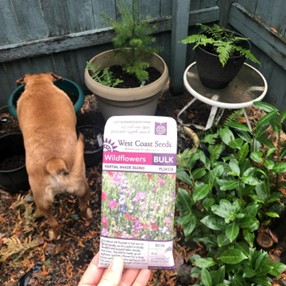
I scattered wildflower seeds from a West Coast Seeds packet directly onto the cold, brown earth contained within a five-litre pot on my apartment’s patio. Despite having a comfortable life, with a loving partner, a steady job, and an angel of a dog, I no longer wanted to be alive. I didn’t want to kill myself, per se, but the thought of not existing anymore was a great temptation. These thoughts came every winter as the days got shorter and colder, and life seemed to shrink in on itself.
Native wildflower seeds require cold stratification to break their dormancy. In nature, a plant goes to seed, and those seeds fall to the ground and are blanketed by fallen foliage, then snow. Finally, the warm Spring sun reaches the dirt, and the seed begins to germinate, grow roots, and sprout through the soil (1). For this reason, at-home gardeners scatter the seeds that require this treatment in the Fall for a beautiful field of blooms the following summer.
 I wished these tiny seeds good luck as they fell from between my fingers and promised to see them again in their next iteration. I knew these seeds had a tenacious will to live, and I would too, once my brain could produce enough serotonin again (2). And sure enough, survive they did, providing constant bursts of blooms to feed the native pollinators and bring joy to a lifeless patio.
By no means do I want to discourage the intake of pharmaceutical treatments for mental health disorders, like depression and seasonal affective disorder. But I do want to highlight more holistic interventions that target non-clinical dimensions of well-being as an alternative to antidepressants that can be costly and have a diverse array of side effects. Countless studies cite positive correlations between gardening and improved mental health, particularly regarding marginalized populations, such as resettled refugees and those with mental illnesses (3; 4; 5; 6).
Once the first season of seeds was successful, I expanded the garden into the apartment’s clandestine backyard, which wasn’t included in any tenant’s lease and was being used as a large litterbox for the neighbourhood cat population. The landlords covered the ground with a thick, black tarp and covered that with a layer of gravel. Life was not permitted to grow there, lest it bring decay and disease to their investment property. I decided to ask for forgiveness, not permission, when filling the backyard with pots of soil.
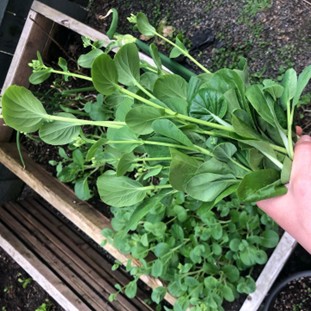
Besides supporting one’s physical and mental health, gardens bear ecosystem, economic, and social impacts. Ecologically, these gardens moderate the microclimate around the building and provide food and a biodiverse habitat for native species (7). Gardens are a traditional means of increasing food security and growing medicine (8). Social cohesion is increased in allotment garden settings (9). In a time marked by pressured supply chains, an ever-increasing cost of living, and increasingly fragmented social connections, gardens present a holistic solution.
Dozens of pots contained edibles such as lettuce, radishes, beets, carrots, spinach, raspberries, pumpkins, kale, potatoes, and peppers; herbs such as lemon balm, mint, sage, oregano, rosemary, and lavender; and perennial native plants like douglas aster, goldenrod, goat’s beard, stinging nettle, ostrich ferns, yarrow, vine maples, cedars, and douglas firs. The garden created beauty and food for all six units of our apartment building. I learned how to compost, propagate perennials, and save seeds. The garden welcomed dragonflies, hummingbirds, and bees. It became my place of refuge and gave me a sense of hope and purpose that I once lacked.
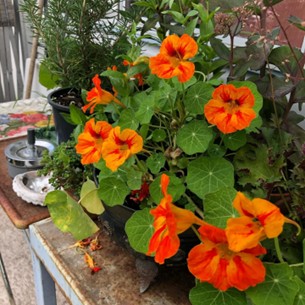
In whatever settings gardens reside, be it hospitals, long-term care homes, schools, incarceration centres, or low-income housing units, these ecosystems will contribute to community health, social inclusion, and ecological regeneration (10). You don’t need a backyard, a patio, or a bed at a community garden to start. While an outdoor space is preferable, an empty yogurt pot of dirt on a windowsill will suffice. As you tend to the life of a seed, from germination to fruition to decomposition, I hope it revitalizes your own will to live as much as it did mine.
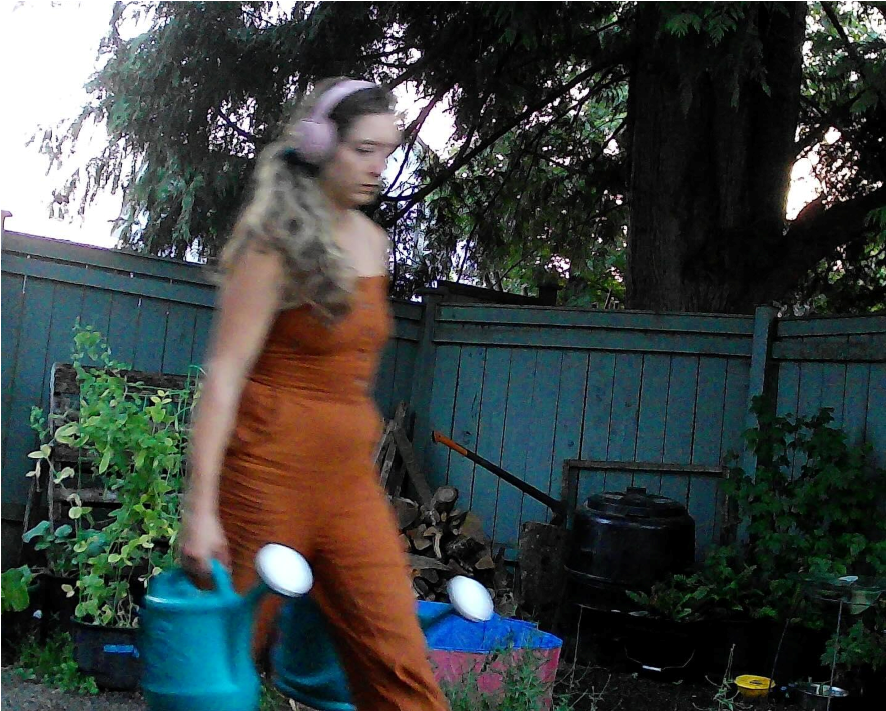
About the author: Andrea is a settler and a descendant of mixed European and Mennonite heritage, currently residing on traditional and unceded Stó:lō territory. She is currently completing her Master of Arts in Community Development at the University of Victoria. In her free time, she likes to putter in her garden, wander through the woods, and cook delicious vats of soup.
References:
1. Sandra, A. (2018, January 2). Growing native plants from seed : Cold stratification. OFNC.https://ofnc.ca/fletcher-wildlife-garden/growing-native-plants-from-seed-cold-stratif ication
2. U.S. Department of Health and Human Services. (n.d.). Seasonal affective disorder. National Institute of Mental Health.
https://www.nimh.nih.gov/health/publications/seasonal-affective-disorder
3. Wang, F., & Boros, S. (2025). Effect of gardening activities on domains of health: A systematic review and meta-analysis. BMC Public Health, 25(1).
https://doi.org/10.1186/s12889-025-22263-9
4. Ainamani, H. E., Gumisiriza, N., Bamwerinde, W. M., & Rukundo, G. Z. (2022). Gardening activity and its relationship to mental health: Understudied and untapped in low-and middle-income countries. Preventive Medicine Reports, 29, 101946. https://doi.org/10.1016/j.pmedr.2022.101946
5. Wood, C. J., Barton, J. L., & Wicks, C. L. (2022). The impact of therapeutic community gardening on the wellbeing, loneliness, and life satisfaction of individuals with mental illness. International Journal of Environmental Research and Public Health, 19(20),
13166. https://doi.org/10.3390/ijerph192013166
6. Whatley, E., Fortune, T., & Williams, A. E. (2015). Enabling occupational participation and social inclusion for people recovering from mental ill‐health through Community Gardening. Australian Occupational Therapy Journal, 62(6), 428–437. https://doi.org/10.1111/1440-1630.12240
7. Delahay, R. J., Sherman, D., Soyalan, B., & Gaston, K. J. (2023). Biodiversity in residential gardens: A review of the evidence base. Biodiversity and Conservation,
32(13), 4155–4179. https://doi.org/10.1007/s10531-023-02694-9
8. Minkoff-Zern, L.-A., Walia, B., Gangamma, R., & Zoodsma, A. (2023). Food sovereignty and displacement: Gardening for food, Mental Health, and community connection. The Journal of Peasant Studies, 51(2), 421–440. https://doi.org/10.1080/03066150.2023.2243438
9. Soga, M., Cox, D., Yamaura, Y., Gaston, K., Kurisu, K., & Hanaki, K. (2017). Health benefits of urban allotment gardening: Improved physical and psychological well-being and social integration. International Journal of Environmental Research and Public Health, 14(1), 71. https://doi.org/10.3390/ijerph14010071
10. Zywert, K. (2024). Sustainable communities for a healthy planet. University of Toronto Press.
The Memory Carried by the Land
by Andrea Moyah Nygren
June 22, 2026
Spirit once showed me a memory carried by the land beside the river in Glen Williams.
Not a dream. 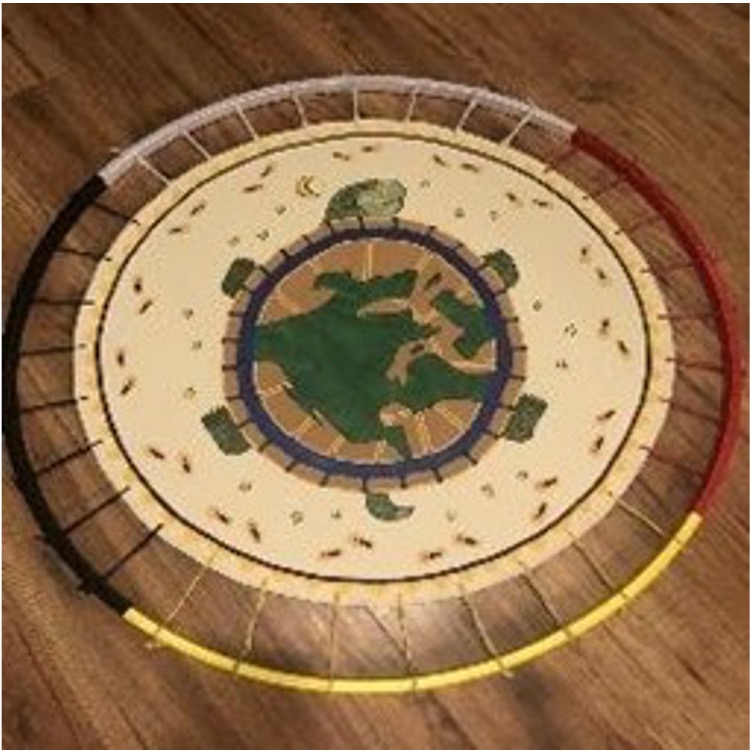
Not imagination.
A remembering.
It came after a pipe ceremony near Credit River; in a place my family has loved for many years. My husband and our five children have spent countless summer days beneath the trees. Two of my children attended preschool in the “Village” preschool, and every summer we float gently down the river together, carried by the current while the trees sway overhead.
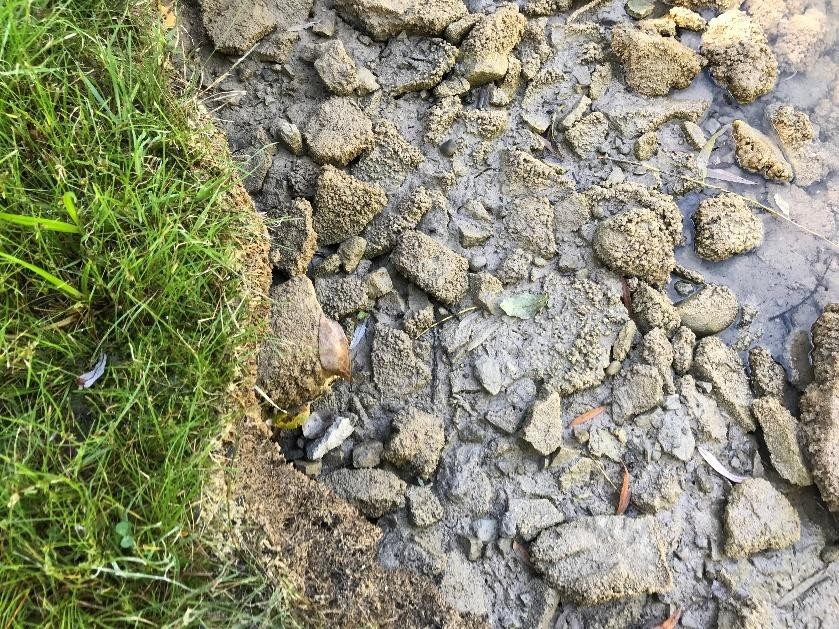
Even before the vision, the land always felt alive to me.
That evening, Spirit showed me why.
Suddenly, the world around me changed.
The roads disappeared.
Time itself seemed to pull backwards like the river reversing its flow.
And there, on the bluff, stood several teepees. Smoke curled softly upward into the sky while a kokum knelt beside the fire, stirring something rich and warm in a hanging pot.
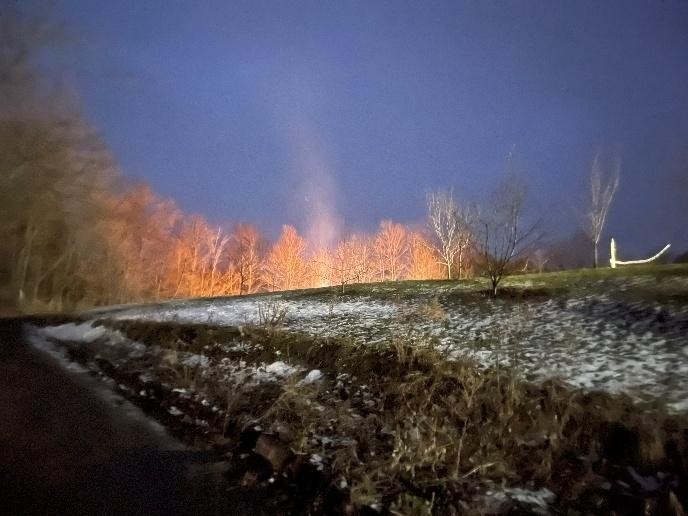
I could smell cedar smoke.
I could hear children laughing somewhere nearby.
Everything felt alive.
Not alive in the way we say forests are alive now.
ALIVE ALIVE.
Watching.
Breathing.
Spirit guided my eyes toward a little boy near the water. He could not have been older than four.
 |
 |
Beside him waddled a turtle.
Not behind him.
Beside him.
Like a brother.
The little boy laughed as the turtle bumped gently against his toes, while they wandered together along the creek. Dragonflies hovered around them and danced in glee, seeing their good friends, the turtle and the boy.
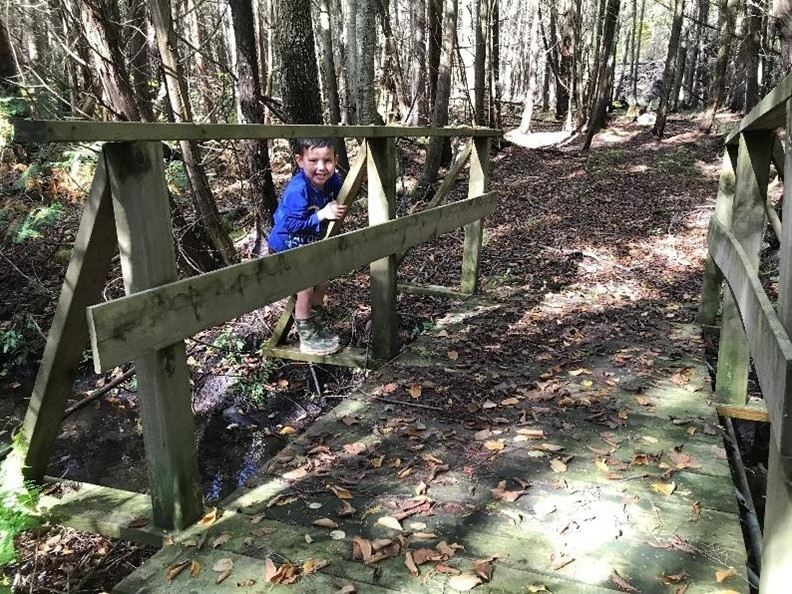
Suddenly, the child wandered dangerously close to the water.
Oh, no.
He is too close to the water.
I felt panic rise in my chest the way mothers do when they see a child too close to danger.
But spirit spoke gently.
“Do not be afraid.”
The wind moved gently through the trees.
“A long, long time ago, children were safe. Everything loved them, everything watched over them.”
And in that moment, I understood something humans have long forgotten.
The little creek knew the little boy.
The water swirled joyfully around the stones as though delighted to se him again. A rabbit burst from the tall grass and stopped directly in front of him.
Everything was connected.
The little boy wandered along the creek speaking to fish, dragonflies, trees, moss, stones, and water.
And everything spoke to the boy.
The tree bent softly in the wind, listening closely to the child’s voice. The creek shimmered brighter when he touched it. Even the rocks carried such warmth, presence, and memory.
After a while, the little boy climbed into a large warm stone beside the creek to rest.
“You are growing, little one,” the rock said slowly.
The boy smiled and placed his small hand against the stone.
“Thank you for letting me rest here,” he whispered, and an air of deep peace and safety was palpable.
Nearby, berry bushes swayed gently in the summer breeze, heavy with fruit. Before eating, the little boy thanked the bush for feeding him. Nothing was separate back then.
The Earth was alive, and humans remembered they were a part of it.
The little boy and the turtle walked for what felt like hours beside the winding creek, speaking to the land as family.
Then suddenly the wind shifted.
Far away near the fire, Kukum lifted her head and smiled softly.
Without raising her voice, she sent her words into the breeze. “Grandsooooon…time to come homoooome…”
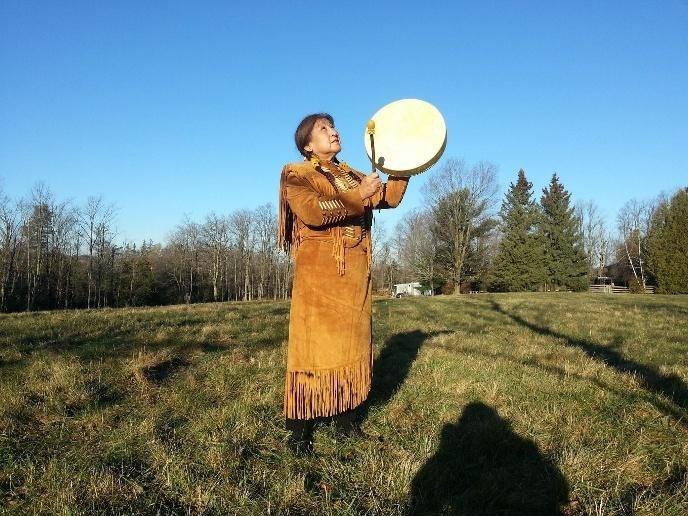
The wind carried her message through the trees, across the water and down the creek until it reached the little boy and his turtle friend.
 |
 |
The child stood immediately.
He had heard her.
Because in those days, humans still listened.
Before leaving, the little boy turned back toward the creek.
“See you again,” he said to the rock.
“Thank you for the berries,” he told the bush.
The rabbit lifted its ears as the little boy waved, “See you again.” Then, finally, the child knelt beside the creek one last time.
“Thank you,” he whispered to the water.
The creek shimmered back at him.
The little boy and the turtle turned together and made their way home, where Kukum waited beside the fire.
When the vision ended, I sat beside the river quietly with tears in my eyes.
I understood the land still remembers.
The animals still speak.
The water still sings and remembers.
We simply forgot how to listen.
But sometimes, when I float down that same river with my children beneath the summer trees, I wonder if the land is patiently waiting for us to remember again.
Perhaps healing begins the moment we remember Earth is ALIVE.
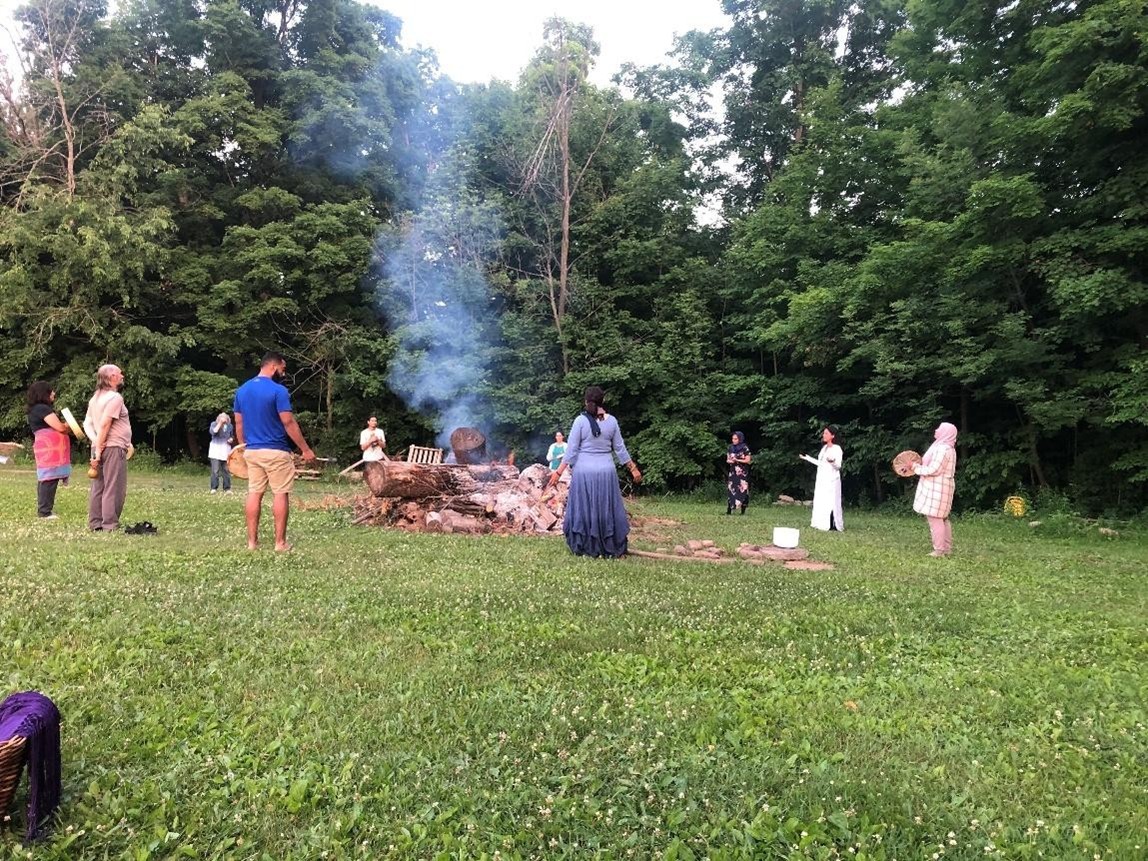
Photo credits: Andrea Moyah Nygren
Les frontières poreuses de la santé : quand humains, animaux et microbes cohabitent
par WILLIAM BISSOU
le 13 novembre 2025
Êtes-vous intéressés par une exploration des limites de la santé humaine à l’ère des zoonoses, du vivant partagé et des vulnérabilités systémiques? De la clinique au territoire, suivez l’itinéraire d'une santé relationnelle.
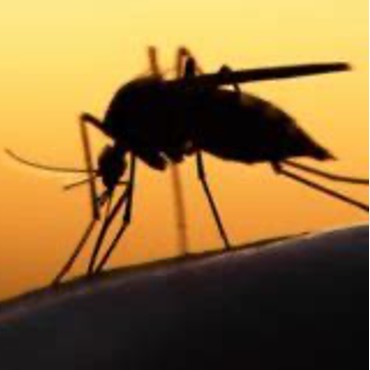
Il y’a quelques jours, une discussion entre camarades sur la définition de la santé vue sous l’angle du moustique femelle a suscité une curiosité en moi. Et si la santé ne se mesurait pas seulement en signes cliniques, mais aussi en liens. Liens entre humains, entre espèces et entre milieux. S’inspirant du cours sur les approches écosystémiques de la santé, ce bloggue nous invite à penser la santé comme un processus co-construit, situé à l’intersection du social, de l’écologique et du politique.
En parcourant ces pages, on passera du cabinet médical au marais menacé, des indicateurs de morbidité à ceux de biodiversité, des décisions institutionnelles aux voix communautaires.
On y interrogera :
- Comment la santé se vit et se pense en relation avec les écosystèmes ?
- Quelles tensions et injustices émergent lorsque le vivant est fragmenté, surexploité, ou ignoré ?
- Et surtout, comment repenser la pratique, la recherche et l’action collective pour construire des territoires plus sains, plus justes, et plus vivables ?
Bienvenue dans un espace de réflexion critique, d’observation sensible et d'engagement éthique pour une santé qui dépasse les murs de la clinique.
Une santé à l’épreuve des liens
Pendant longtemps, le modèle biomédical classique a pensé la maladie comme une anomalie biologique localisée, la santé comme une affaire de corps individuel : un organisme en équilibre, un patient isolé, une pathologie à guérir. Cette vision héritée de la clinique moderne, a largement structuré les systèmes de santé contemporains. Cependant, avec les crises sanitaires globales telles que le VIH, le SRAS, Ebola, et plus récemment la pandémie de COVID-19, un constat s’impose : la santé humaine n’est pas autonome. Elle est entrelacée avec celle des animaux, des écosystèmes, des infrastructures, des modèles économiques et des imaginaires collectifs. Elle est vulnérable aux effets en cascade d’un monde interconnecté.
C’est ici qu’intervient la perspective écosystémique de la santé, ou écosanté, qui nous invite à sortir de la clinique et à penser les frontières poreuses du vivant.
Le saut d’espèce n’est pas un accident
Selon l’Organisation mondiale de la Santé (OMS) les futures pandémies humaines risquent d’être d’origine zoonotique et que les espèces sauvages en seront la principale source[1]. Les maladies dites zoonotiques[2] représentent aujourd’hui plus de 60 % des maladies infectieuses émergentes. Toutefois, leur émergence n’a rien de naturel. Elle est souvent accélérée ou provoquée par les pratiques humaines telles que la déforestation massive qui pousse les animaux sauvages à côtoyer les humains, les marchés d’animaux vivants, souvent dans des conditions insalubres, l’élevages industriel intensif etc. Ainsi, ce que nous appelons le « saut d’espèce » n’est pas une anomalie biologique, c’est le symptôme d’un modèle de développement destructeur, qui fracture les écosystèmes et multiplie les points de contact à haut risque. Dans cette optique, il semble logique que soigner une épidémie sans traiter ses causes écologiques revient à stériliser une plaie sans retirer l’écharde.
Microbes, alliés et menaces : vers une écologie du minuscule
Souvent perçus comme les ennemis invisibles des humains, les microbes sont pourtant dans la majorité nos alliés. En effet, ils participent à notre digestion, régulent notre immunité, protègent notre peau et même notre cerveau. Le microbiote humain, cet écosystème intérieur de milliards de bactéries et champignons, est façonné dès la naissance : par le type d’accouchement, l’allaitement, le contact avec la nature, la diversité alimentaire. Celui-ci est façonné et modifié en fonction notre mode de vie.
Avec l’urbanisation, la médicalisation excessive (antibiotiques), l’alimentation industrielle et la déconnexion avec le vivant, cette richesse microbienne se fragilise avec pour conséquence une croissance des maladies inflammatoires, auto-immunes et allergiques.
Protéger notre microbiote ne relève pas seulement de la médecine, cela exige une écologie du soin[3], où l’humain, ses microbes et son environnement forment un continuum fragile qui protège également notre santé mentale.
Santé mentale et territoire : l’invisible connexion
L’autre champ de la santé longtemps resté marginal notamment dans les pays du sud global est la santé mentale. Bien que mieux reconnue aujourd’hui, ses liens profonds avec l’environnement restent peu étudiés. Pourtant, les recherches montrent que le contact régulier avec des espaces naturels améliore la concentration, diminue le stress, réduit les symptômes anxieux et dépressifs[4]. À l’inverse, vivre dans des environnements bruyants, pollués, sans accès à la nature, augmente la charge mentale, l’irritabilité, les troubles du sommeil[5]. D’autres études ont montré que la perte ou la transformation brutale de son territoire cause chez les humains la solastalgie, tandis que catastrophes climatiques passées, présentes et futures sont responsables de « l’éco anxiété » ces troubles de la santé nous rappellent que notre équilibre psychique est enraciné dans un lieu. Quand ce lieu est détruit à cause de la déforestation, l’extraction minière, le déplacement forcé, la santé mentale s’effondre avec.
Inégalités écologiques, inégalités sanitaires
La crise climatique et écologique ne touche pas tout le monde de la même manière. Elle renforce des inégalités sociales et territoriales préexistantes. Cela suppose que « les populations pauvres vivent souvent dans les zones les plus polluées, inondables ou exposées aux risques climatiques, que les femmes, dans de nombreux contextes, sont plus exposées aux risques environnementaux à cause de leur rôle dans la gestion de l’eau, de la nourriture, ou de la santé des enfants, et que les peuples autochtones voient leur santé menacée par la perte de biodiversité, la contamination des sols et des eaux, et l’accaparement de leurs terres ».[6] Réfléchir à la santé, c’est donc penser aussi la justice sociale et environnementale. Car il n’y a pas de santé durable sans équité.
Vers une santé relationnelle
Face à ces constats, que faire ? Il ne s’agit pas seulement d’élargir la définition de la santé, mais de changer notre manière de penser le soin. De passer de la réparation à la prévention, de l’individu au collectif, du symptôme à l’écosystème, ou encore de la séparation au vivre-ensemble du vivant. Les approches écosystémiques nous proposent une santé relationnelle, dans laquelle soigner un humain, c’est aussi préserver son environnement, protéger un territoire, c’est préserver des liens culturels, affectifs, biologiques et dialoguer entre disciplines, savoirs et acteurs devient une nécessité éthique et stratégique.
[1] https://fr.worldanimalprotection.ca/blogs/comprendre-les-zoonoses/
[2] Les maladies zoonotiques (zoonoses) sont des maladies ou des infections transmissibles des animaux aux êtres humains
[3] Truc, H. et Alderson, M. (2010). Mieux comprendre l'écologie humaine dans le contexte de la pratique des soins infirmiers. Recherche en soins infirmiers, 101(2), 4-16. https://doi.org/10.3917/rsi.101.0004.
[5] https://www.inspq.qc.ca/en/node/32764
[6] Notre Affaire à Tous. (2020). Un climat d’inégalités : Les impacts inégaux du dérèglement climatique en France. https://notreaffaireatous.org/.
Le Tupiniquim
When Beavers Build Better Health: What Nature’s Engineers Teach Us About Healing Ecosystems and Communities
By Shona Thorne
September 15, 2025
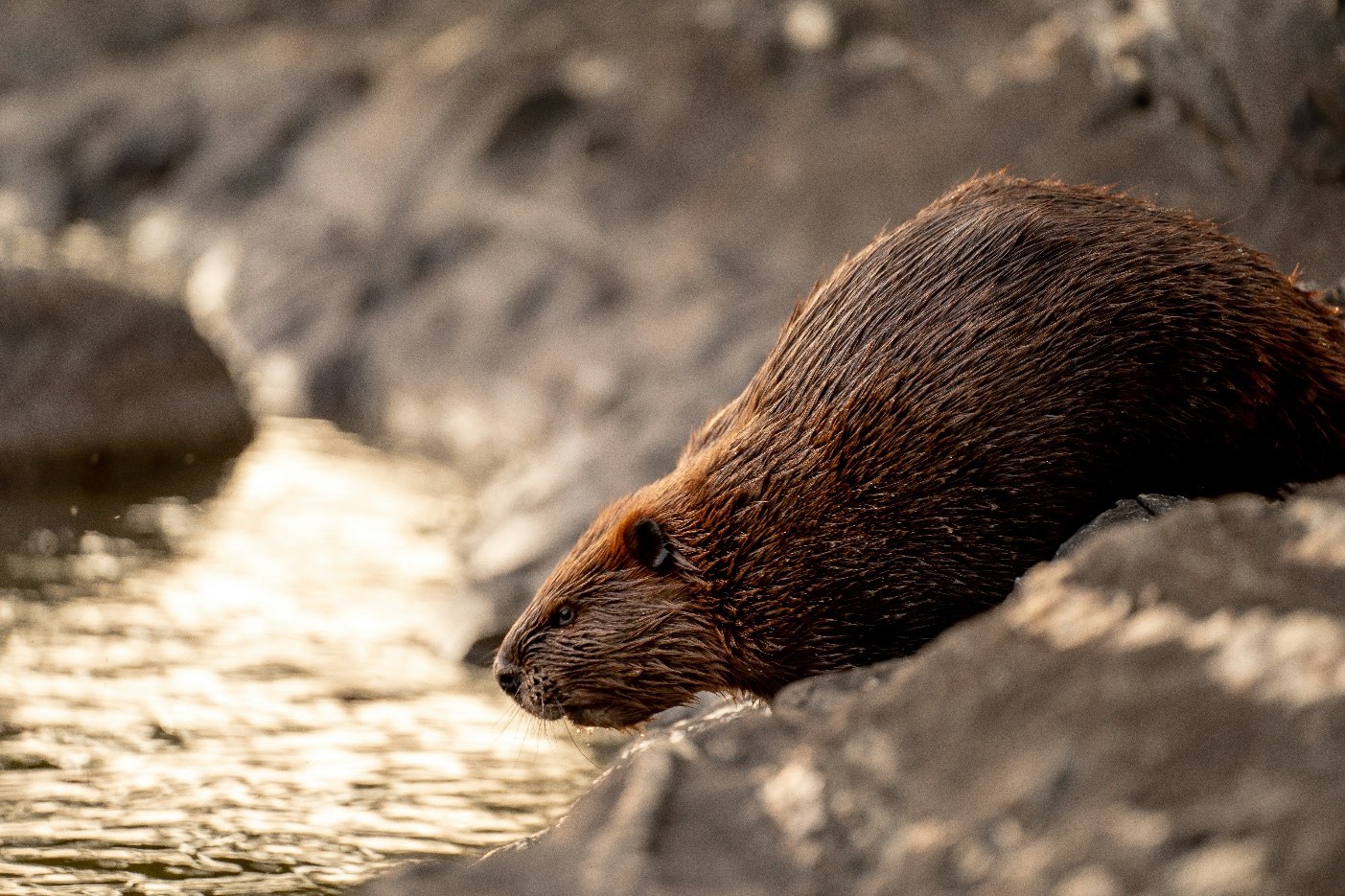
Photo by Tim Umphreys on Unsplash
What if one of the best public health workers in your community had a flat tail and sharp teeth?
It sounds like the beginning of a joke—but it’s a serious thought.
In these uncertain times of climate disruption, chronic disease, and social fragmentation, a surprising hero has surfaced: the beaver. More than just a representation of Canadian wilderness, the beaver has become a natural symbol of an idea whose time has come — Ecosystem Approaches to Health, or EcoHealth.
But this isn’t just a story about how amazing beavers are. It’s a story about how nature-based solutions can simultaneously support environmental, physical, and mental health—and why ignoring these connections puts all of us at risk.
What Is EcoHealth, Anyway?
EcoHealth is more than a catchy term. It’s a transdisciplinary approach that recognizes how human health is intrinsically tied to the health of our ecosystems. It invites us to look beyond doctors’ offices, clinics and hospitals, and instead to consider forests, farms, watersheds, and wetlands as part of our health infrastructure.
Beavers embody this idea perfectly. These ecological engineers reshape landscapes by building dams that create wetlands. In turn, wetlands filter waterbodies, help recharge aquifers, buffer against floods and fires, and boost biodiversity. But that’s not all. The benefits ripple out to human health too.
Beaver-built wetlands help:
- Cool local microclimates, offering natural protection from heatwaves
- Support food chains, including fish and edible plant life
- Create calming environments shown to improve mental well-being
A growing body of research confirms what many already feel: spending time in nature reduces stress, lowers blood pressure, and improves mood. Spending time in biodiverse natural environments doesn’t just soothe the mind—it helps shape the body’s microbiome, influences immune resilience, and reminds us that we are, quite literally, ecosystems ourselves.
A major 2020 international study from the University of Exeter found that ‘blue spaces’—lakes, rivers, and wetlands—are just as beneficial for mental health as green spaces and that encouraging more blue space experiences during childhood, whether it’s playing by creeks or shores, exploring wetlands, could be a simple yet powerful way to support the mental well-being of future generations.
In this way, beavers are quietly beavering away to keep offering ecosystem gifts that nourish both planetary and personal well-being.
Beaver Comebacks, Health Comebacks: A BC Case Study
Centuries of beaver trapping for fur devastated wetland ecosystems but the tide is turning. In early 2023, the B.C. Wildlife Federation (BCWF) launched the 10,000 Wetlands initiative, aiming to restore and enhance wetland systems across the province.
A central part of this effort involves installing Beaver Dam Analogues (BDAs)—structures that mimic natural beaver dams - to stimulate ecosystem restoration and biodiversity. But this isn’t just about science; it’s also about reconciliation. The BCWF is working with First Nations and Indigenous communities to ground these projects in traditional knowledge systems—ones that have long recognized the inseparability of land, health, and spirit.
The goals of this initiative are many:
- Slow down water loss
- Mitigate drought
- Restore salmon habitat
- Rebuild cultural connections to the land
And the outcomes?
- Improved food security through healthier aquatic ecosystems
- Reduced wildfire risk, as wetlands act as natural firebreaks
- Improved mental wellness and youth engagement, as communities reconnect with land stewardship
This is EcoHealth in action: seeing nature not as a backdrop, but as a co-therapist, co-teacher, and co-guardian of community well-being.
Now What? From Beavers to Better Policy
What does this mean for health professionals, educators, and policymakers?
First, we must broaden our definition of health infrastructure. Wetlands, forests, rivers—and yes, beavers—aren’t just ecological luxuries. They are vital components of our shared health system.
Second, we need to invest intentions and time in building transdisciplinary relationships. That means bringing ecologists, doctors, Indigenous elders, urban planners, and youth together to co-create solutions. The beaver may not attend policy summits, but it models the power of natural restoration better than most human interventions.
Third, we need to shift from siloed to systems thinking. EcoHealth is not about isolating sectors. It’s about recognizing the full web of life and well-being, and learning how to thrive within it.
Call to Action
Start small. Work together. Build connections.
- If you're a health professional, explore how natural spaces can become part of your prescriptions.
- If you're a policymaker or planner, integrate wetland restoration into your public health and climate adaptation strategies.
- If you're an educator, take students of every age outside—and into deeper conversations about land-based knowledge.
- And if you’re a citizen, champion nature as a health ally in your neighbourhood, town, or territory.
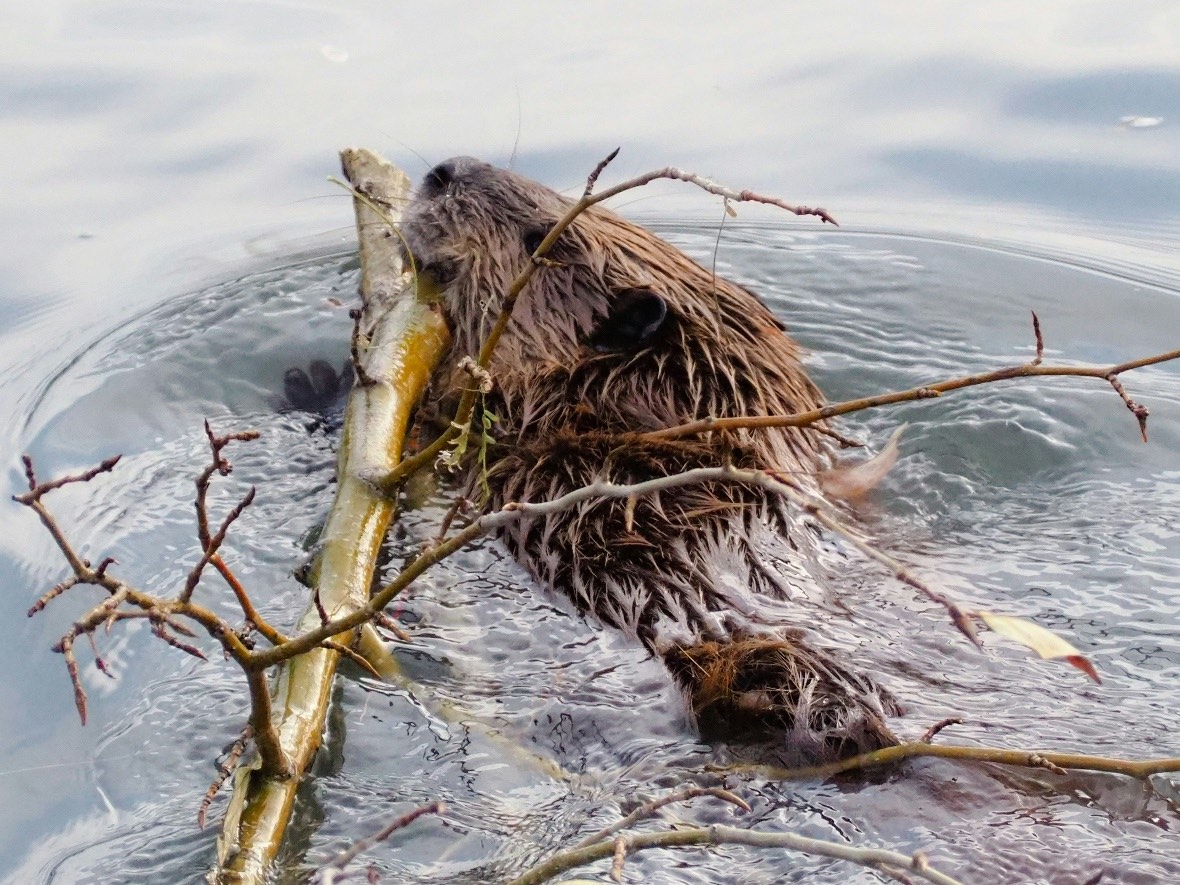
Beavers don’t just build dams.
They build resilience, and above all they don’t quit.
In a world stumbling between ecological collapse and hopeful regeneration, resilience and perseverance might be some of the most powerful medicine we’ve got.
Photo by Ng Sze En on Unsplash
|
“Beavers, the animal that doubles as an ecosystem, are ecological and hydrological Swiss Army knives, capable, in the right circumstances, of tackling just about any landscape-scale problem you might confront. Trying to mitigate floods or improve water quality? There’s a beaver for that. Hoping to capture more water for agriculture in the face of climate change? Add a beaver. Concerned about sedimentation, salmon populations, wildfire? Take two families of beaver and check back in a year. If that all sounds hyperbolic to you, well, I’m going to spend this book trying to change your mind.” ― Ben Goldfarb, Eager: The Surprising, Secret Life of Beavers and Why They Matter |
Die Another Way: Finding sustainability and reciprocity in death
By Rachael Young
September 15, 2025
 With a scalpel in hand, I inspected the palm in front of me closely. Stealing a glance to my textbook, I took a deep breath and began to cut. Methodically, I parsed apart layers of skin and fascia, eyes always seeking the intricate network of muscles, tendons and nerves that lay just below. Tracing around delicate wrinkles, I advanced slowly toward the fingertips. Despite the shakiness of my unpracticed hand, it was peaceful, and my mind began to wander. This was not the first time I’d dissected in the cadaver lab, but at just a few weeks into my intro anatomy course, I was still uncertain. Uncertain about what tools to use, uncertain about how to find the tiny nerves that would appear on my exam, and above all, uncertain about how to feel.
I had a strange relationship with the body in front of me. In some ways, I knew this person more intimately than anyone had known them in life. I had literally seen the depths of their heart, but I didn’t know their name. I was the last person to ever hold their hand. Who was the first, I wondered. Had this hand played an instrument, worn a wedding ring, cradled a child? I will never know. The only thing I am sure of, is that this person’s final act in life was to give themselves completely to others in death. It was comforting to witness death as a gift like this. I felt less uncertain, and more grateful.
My focus eventually returned to the dissection. By the end of lab, I’d revealed much of the palmar surface; I could name and identify every muscle, artery, tendon, nerve, and bone that was tested on the midterm. I’ve since forgotten much of this anatomy, but I remember the feeling of holding that hand. I remember the way it held mine back. I remember the space it gave me to reflect on the impact of our bodies after we die.
Outside of these rather one-sided conversations in cadaver labs, I find that good discussions about death can be hard to come by. In the rare cases when we are encouraged to talk about death, the focus is often on practicalities or the psychological benefits of doing so. While I recognize the importance of these approaches, there is a more pressing issue that should motivate us to prioritize this dialogue; our death rituals are harming ecosystems globally1. Over 300,000 people die every year in Canada2, the vast majority are either cremated, or embalmed and buried3. Both of these practices exacerbate existing threats to human and more than human life1.
Cremation is the most common death practice in Canada3, and it is a source of several concerning emissions4,5. In the cremation process, carbon dioxide is released from the natural gases burned to power furnaces as well as from the organic carbon stored in human bodies1. This contributes to the global greenhouse gas effect and ongoing climate crisis, but there are further hazards still. Compounds that accumulate in the human body such as heavy metals like mercury, volatile organic compounds like benzene, and other concerning chemicals, are routinely emitted during cremation5. A study in British Colombia, for example, found that crematoriums accounted for over 7% of atmospheric mercury emissions in the province6. Once released, these pollutants may enter any part of the ecosystem and endanger the health of many living things5.
Like cremation, traditional embalming and burial practices produce a number of harmful environmental impacts1. After burial, heavy metals, pathogens, and hazardous chemicals from embalming, like formaldehyde, leach from bodies into the surrounding soil7–9. Eventually, these pollutants enter ground water systems, and spread throughout the ecosystem7,9. Then, there are the materials involved in the process. From coffins to grave markers, resources are extracted and may be transported long distances to complete the burial process1. There are also land-use concerns. Cemeteries can take up large areas, which may contribute to habitat fragmentation and other ecological concerns10. Grass lawns are common and require large amounts of water while contributing little to biodiversity1,10. Together, these factors have concerning implications for the health and well-being for humans, animals and plants alike.
In recent years, green burial practices have emerged as a potential solution to these challenges1,10. While there are promising options like water cremations that reduce harmful emissions, natural burials, and traditional Indigenous practices, there remain significant challenges1,10. These alternatives are often expensive, inaccessible, or not legally recognized under colonial systems10. Complex social, cultural, and religious practices may also impact choices around death1. So how do we make sustainable, lasting changes? Beyond small steps like opting for alternative cremation, avoiding embalming and choosing local, natural materials for grave markers, I don’t think there is a simple answer. I do, however believe that talking more openly about death and the impacts of death practices on ecosystems is a good place to start.
Conversations about death can be hard, but I often find them easier when I think back to my experiences in the human anatomy lab at the University of Guelph. It’s difficult to articulate what a privilege it was to learn from the body donors. I can confidently say that over the two years I spent in the anatomy program, they taught me far more than just the structure and function of the human body. I cannot thank someone who is dead, so instead I find myself asking how I can give to others like they gave to me; I invite you to do the same. How can we make our deaths and death practices more sustainable? How can we become more like the hand that held mine when I was so uncertain? How can we turn death into a gift for all living things?
References
1. Nosi, C., D’Agostino, A., Ceccotti, F. & Sfodera, F. Green funerals: Technological innovations and societal shifts toward sustainable death care practices. Technol Forecast Soc Change 207, 123644 (2024).
2. Deaths, by month. https://www150.statcan.gc.ca/t1/tbl1/en/tv.action?pid=1310070801.
3. Industry Statistical Information - Cremation Association of North America (CANA). https://www.cremationassociation.org/industrystatistics.html.
4. Xue, Y. et al. Emission characteristics of harmful air pollutants from cremators in Beijing, China. PLoS One 13, e0194226 (2018).
5. Mari, M. & Domingo, J. L. Toxic emissions from crematories: A review. Environ Int 36, 131–137 (2010).
6. Piagno, H. & Afshari, R. Mercury from crematoriums: human health risk assessment and estimate of total emissions in British Columbia. Can J Public Health 111, 1011 (2020).
7. Zychowski, J. Impact of cemeteries on groundwater chemistry: A review. Catena (Amst) 93, 29–37 (2012).
8. Ezenwa, I. M. et al. Burial leakage: A human accustomed groundwater contaminant sources and health hazards study near cemeteries in Benin City, Nigeria. PLoS One 18, e0292008 (2023).
9. Zychowski, J. & Bryndal, T. Impact of cemeteries on groundwater contamination by bacteria and viruses – a review. J Water Health 13, 285–301 (2015).
10. Green end-of-life options - David Suzuki Foundation. https://davidsuzuki.org/living-green/green-end-of-life-options/.
Nature’s Cure for a Disconnected World
By Megan Tomlison
September 15, 2025
 Nestled within the woodlands of a semi-urban town along the Pacific Coast of British Columbia, a towering Douglas Fir stands like a sentinel —ancient, steady, and quietly dignified. I call her ‘Big Mama.’ For many years, my routine has been to visit this majestic giant at the end of a stressful nursing shift. My practice is to take pause in Big Mama’s presence and lean into her quiet, unconditional support. Without words, she soothes my nervous system and rekindles my spirit. Needless to say, I was heart broken during a recent visit when I found Big Mama defaced by spray paint. The vandalism was sloppy, somewhat illegible and appeared to convey a disturbing message of racial intolerance. A week later, while exploring another nearby forest, I came across three more trees tagged with similar messages.
It goes without saying that trees are a life-giving organism. They provide shelter, oxygen, and habitat for wildlife. Trees improve soil and water conservation and are a vital solution in mitigating climate change by sequestering carbon dioxide from the atmosphere. The traditional knowledge of Indigenous peoples highlights the significance of trees – in addition to serving as a source of sustenance and medicine, trees are sacred beings deserving of reverent stewardship for the well-being of the eco-systems and its future generations.
Western science is only just beginning to understand the human health benefits associated with trees and the natural world. Phytoncides - antimicrobial organic compounds emitted by trees and plants, similar to essential oils – are thought to mediate health promoting effects and can improve human immune function. Immersing oneself in nature, a therapeutic practice known in Japan as Shinrin-yoku, or forest bathing, appears to benefit human health in a multitude of ways. Increasing research indicates that forms of nature therapy, whereby a meaningful connection to the natural world is established, has been shown to reduce stress, enhance joy and contributes to better sleep. Individuals should seek clinical guidance from a health care provider, however nature therapy may serve as a low risk, complimentary treatment for chronic disease management and improved cognitive function. Youth living with attention deficit hyperactivity disorder (ADHD) may also benefit from just twenty minutes per day of nature therapy as a safe, inexpensive intervention to improve concentration.
The promotion of nature therapy as a legitimate health intervention is gaining momentum, as seen in the BC Parks Foundation PaRx program, whereby regulated health care practitioners prescribe nature therapy to improve overall well-being. That said, access to nature is not evenly distributed, particularly in the context of socio-economic disparity. It is in our collective interest to prioritize access to green spaces for human health and for the protection of the natural world. It is broadly accepted that the more time people spend in nature, the more likely they are to protect it. Initiatives such as PaRx may therefore serve as a dual strategy: improving human health and fostering ecosystem stewardship.
The protection of forests and wild spaces requires a multifaceted approach. While individual actions and grassroots initiatives are vital, all levels of government share responsibility for environmental protection – particularly as colonial driven agendas of extraction persist. Governments must work diligently to ensure Indigenous voices and traditional knowledge are central to decisions regarding natural resource management. With growing pressure to densify urban spaces, municipal leaders must prioritize access to green spaces for all residents as a critical measure for public health.
The graffiti on Big Mama’s bark wasn’t just vandalism—it was a symptom of a deeper disconnection, a warning sign of how far we’ve strayed from our relationship with the natural world. But disconnection can be healed. Each walk in the woods, each breath among trees, each moment of quiet wonder is a step back toward wholeness.
Trees don’t just hold up the sky—they hold up our future. It’s time we hold them up, too.
We are what we eat – Healing through local food systems
By Fenja Neumann
August 28, 2024
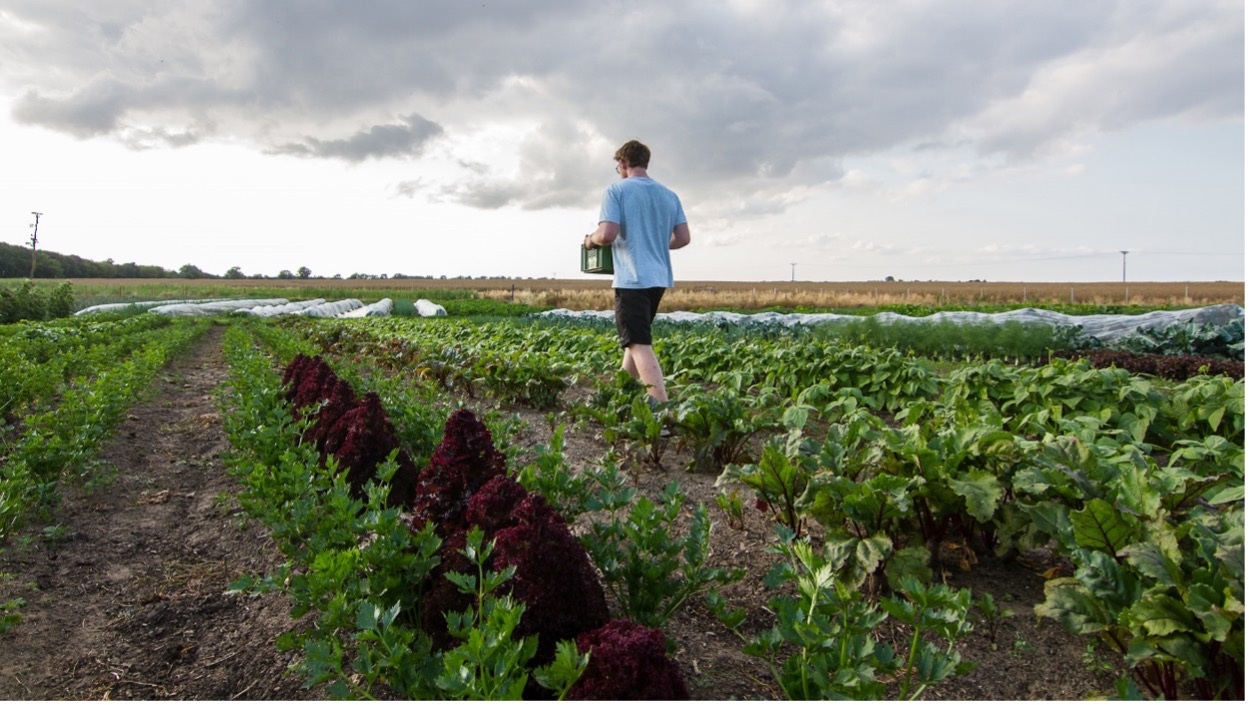
Local market garden in Mecklenburg Western Pommerania, Germany. © Fenja Neumann
Have you ever heard of the saying “You are what you eat”? Well, we literally are. Modern research has proven that the gut is directly connected to the brain, which means that the food we eat influences our brain chemistry1. Not only can food determine our mood, but it also affects our immune system. Thus, besides providing us with energy and nutrients, food can reduce or enhance diseases and it impacts our biochemistry2. There is a growing awareness that what we put into our mouths is important, but how well do we really eat?
If we take a closer look at the global food system, we will find that it doesn’t nourish us as it should, but rather creates a cascade of health-related problems. As we walk through our supermarkets, it becomes evident that unprocessed food, such as organic vegetables, fruits, grains, legumes, and raw animal products, is much more expensive than processed goods. One reason for this is that our globalised food system heavily relies on imports3. In 2022, approximately 75% of vegetables and 37% of fruit were imported, largely from the US20,21. However, in 2019, Canada also exported around 1 million tonnes of vegetables, while over 2 million tonnes were still imported21. This indicates that greater self-sufficiency is possible if Canadian produce largely remains within the domestic food system. Quebec, for example, improved its self-sufficiency for greenhouse-grown vegetables from 30% to 50%, now targeting 80%22.
One aspect that surprised me is that five large retailers hold 76% of the market share in Canada23. And while the net revenues of Canadian grocers have been steadily growing (e.g., from 1.4 billion in 2017 to 2.6 billion $ in 20214), the prices for the consumer are skyrocketing, with an increase of over 10% for most provinces in 2022 alone5. With 6.9 million (17.8%) food-insecure Canadians in 20236, it seems outrageous that approximately 20% of all food produced in the country is wasted every year19.
Sadly, the food that is affordable for lower-income households is often highly processed, nutrient-deficient, and detrimental to our health7. This kind of diet is frequently associated with heart disease, diabetes, cancer and strokes. Moreover, the global food system is built on a highly unsustainable industrial agriculture. It enhances climate change, degrades our soils, pollutes our waters and poisons our nature. And as we are an integral part of nature, it directly affects us. It has been proven, for example, that certain pesticides can promote cancer, developmental- and reproductive impairments, and changes in the immune system. Unfortunately, industrial meat production looks just as dire. Factory farming is not only an ethical disaster, it also increases the spread of zoonotic diseases between animals and humans and promotes antimicrobial resistance, both of which can be fatal7. I think it’s safe to say that if the price of food is health, it’s too high.
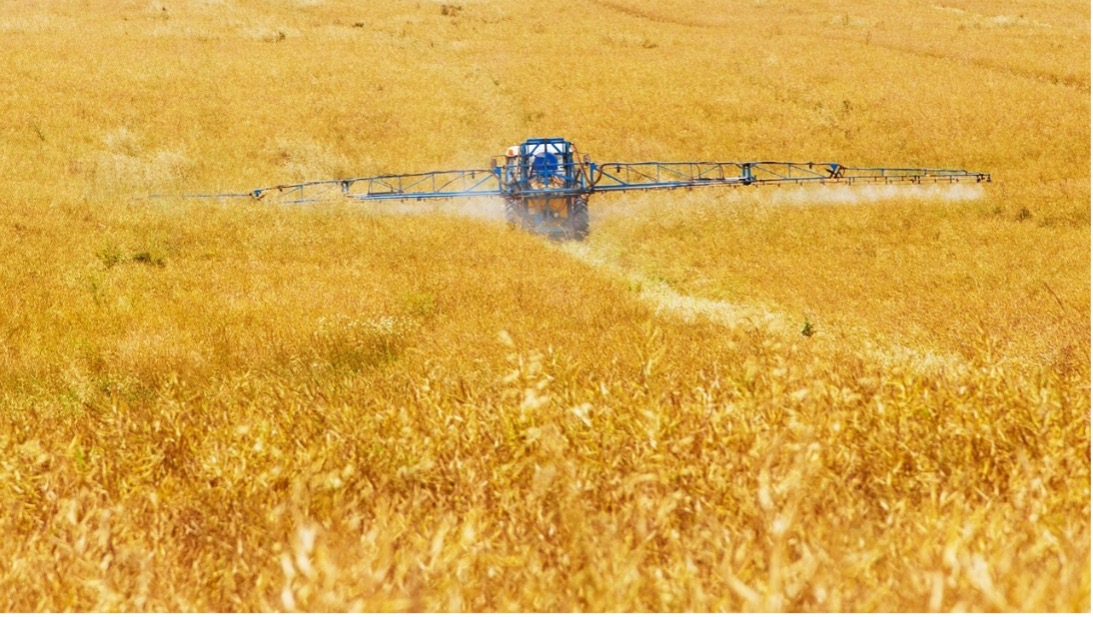
Crop field being sprayed with pesticides. © PublicDomainPictures from Pixabay
But where do we start to heal from a system that literally makes us sick? The answer is quite simple: Locally. The current agricultural industry is very centralised8 – A small number of large-scale farms sell to a few big wholesalers or retailers. While the last pandemic clearly demonstrated that this import-dependent system threatens our food security9, local food systems (LFS) are regarded as more resilient and thus received increasing attention10. They can be interpreted as “collaborative networks that integrate sustainable food production, processing, distribution, consumption, and waste management in order to enhance the environmental, economic, and social health of a particular place”11. The government of Canada considers food as local when it’s produced within the province or 50 km beyond12, whereas it’s only a radius of 20 – 100 km within European countries13. There are many ways to acquire local products, for example at farmers' markets, or directly from the producers. Other options include food boxes, community gardens, community-supported agriculture, food hubs, restaurants, (local) retail, or even wholesale10. But the closer, the better.
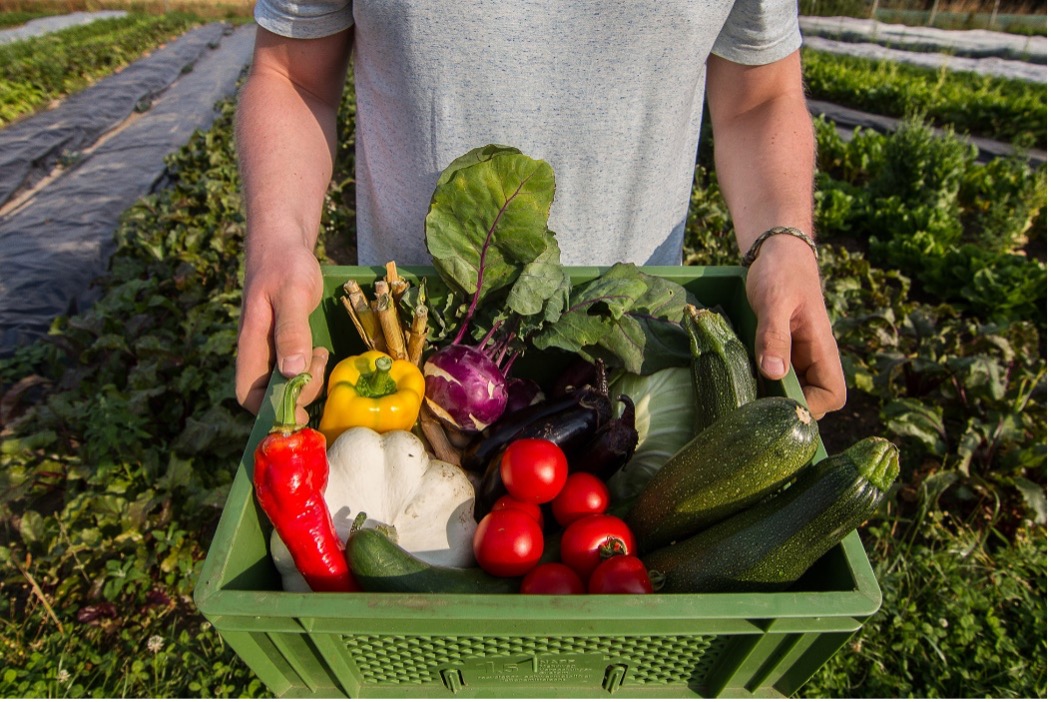
Community-supported agriculture (CSA) in Mecklenburg-Western Pomerania, Germany. They farm bio-intensive and regenerative on 1,4 acres and supply 80 households with fresh vegetables once per week. © Fenja Neumann
Local food systems have tremendous benefits on different levels. They support local economies and small-scale, family-owned farms14. While currently, large corporations have the power over our food, LFS can increase our food sovereignty, as they allow us to build relationships with producers and support them in their practices – actively or passively. Being involved in farming can be healing in itself. Reconnecting with nature through gardening bears great potential to improve our mental health15. Small-scale local farms don’t rely on pesticides and antibiotics, as diseases are not spread as easily as in factory farming. While they may still apply it, it’s likely to a much lesser extent, and studies show that local producers often farm organically16. So locally grown food is not only healthier, it also contains more flavour and vitamins due to the short transport routes. This also benefits the climate by saving greenhouse gas emissions. Local farms often have a greater interest in caring for the land they depend on. Sustainable practices help to reduce environmental pollution, biodiversity loss, and soil degradation.
Despite the advantages of LFS, they only account for a small portion of the overall food consumption in Canada. While local in-season vegetables and fruit can be cheaper than in grocery stores17, consumers are unquestionably facing access barriers for some products, especially pricing18. Competing with global players is challenging, and there are still many other economic and political barriers to expanding LFS. Nevertheless, our health depends on the transformation towards sustainable food production, and local food systems are a good starting point. Depending on financial and personal resources, there are many ways to get involved in LFS, for example by:
♥ checking out https://farmfolkcityfolk.ca/ and https://youngagrarians.org/ for local farms, CSA’s and young farmer’s initiatives
♥ growing food in our own yard or community gardens, urban farms, etc.
♥ shopping at farmer’s markets or buying directly from local farmers and producers
♥ getting involved in CSA’s or subscribing to local food boxes
♥ purchasing seasonal and local products in the grocery store
_______
1 Basharat, I. (2023, March 22). You are what you eat: The gut-brain connection. Retrieved from https://oxsci.org/gut-brain-connection/
2 Mierziak, J., Kostyn, K., Boba, A., Czemplik, M., Kulma, A., & Wojtasik, W. (2021). Influence of the bioactive diet components on the gene expression regulation. Nutrients, 13(11), 3673. https://doi.org/10.3390/nu13113673
3 Canada, A. a. A. (2020, May 27). Canada’s food security dependencies. Retrieved from https://agriculture.canada.ca/en/sector/data-reports/canadas-food-security-dependencies
4 Government of Canada. (2019, March 1). Grocery stores - 4451 - Retail revenues and expenses - Canadian Industry Statistics - Innovation, Science and Economic Development Canada. Retrieved from https://ised-isde.canada.ca/app/ixb/cis/retail-detail/4451
5 Charlebois, S., Rankin, A., Taylor, S., Keselj, V., Abebe, G., Colombo, S., . . . Humes, K. (2023). Canada’s Food Price Report 2023. (J. Lord, Ed.). Retrieved from https://cdn.dal.ca/content/dam/dalhousie/pdf/sites/agri-food/Canada%27s%20Food%20Price%20Report%202023_Digital.pdf
6 PROOF - Food Insecurity Policy Research. (2024, April 26). How many Canadians are affected by household food insecurity? - PROOF. Retrieved from https://proof.utoronto.ca/food-insecurity/how-many-canadians-are-affected-by-household-food-insecurity/
7 United Nations Environment Programme. (n.d.). 9 ways food systems are failing humanity. Retrieved from https://www.unep.org/news-and-stories/story/9-ways-food-systems-are-failing-humanity
8 Thu, K. (2009). The centralization of food systems and political power. Culture & Agriculture, 31(1), 13–18. https://doi.org/10.1111/j.1556-486x.2009.01013.x
9 BC Centre for Disease Control. (2024). EXAMINING THE CONSEQUENCES OF THE COVID-19 PANDEMIC: Food insecurity situation. Retrieved from http://www.bccdc.ca/Health-Professionals-Site/Documents/societal_consequences/Food_Insecurity.pdf
10 Enthoven, L., & Van Den Broeck, G. (2021). Local food systems: Reviewing two decades of research. Agricultural Systems, 193, 103226. https://doi.org/10.1016/j.agsy.2021.103226
11 Feenstra, G., & Campbell, D. C. (2013). Local and regional food systems. In Springer eBooks (pp. 1–9). https://doi.org/10.1007/978-94-007-6167-4_73-1
12 Statistics Canada. (2023, September 5). The Daily — Survey on Local Food and Beneficial Management Practices, 2022. Retrieved from https://www150.statcan.gc.ca/n1/daily-quotidien/230905/dq230905a-eng.htm
13 European Commission. (2013). Short Food Supply Chains and Local Food Systems in the EU. A State of Play of their Socio-Economic Characteristics (report EUR 25911 EN). https://doi.org/10.2791/88784
14 Michigan State University - MSU Extension. (2019, January 17). Seven benefits of local food. Retrieved from https://www.canr.msu.edu/news/seven-benefits-of-local-food
15 Thompson, R. (2018). Gardening for health: a regular dose of gardening. Clinical Medicine, 18(3), 201–205. https://doi.org/10.7861/clinmedicine.18-3-201
16 Link, A., & Ling, C. (2001, February 7). Farmers’ markets and local food systems. Retrieved from https://www.crcresearch.org/crc-case-studies/farmers-markets-and-local-food-systems
17 Pirog, R., & McCann, N. (2009). Is local food more expensive? A Consumer Price Perspective on Local and Non-Local Foods purchased in Iowa. Retrieved from https://www.leopold.iastate.edu/files/pubs-and-papers/2009-12-local-food-more-expensice-consumer-price-perspective-local-and-non-local-foods-purchased-iowa.pdf
18 Carter, R. (2017, January 26). The true cost of local food | UVM Food Feed. Retrieved from https://learn.uvm.edu/foodsystemsblog/2017/01/24/true-cost-of-local-food/
19 Canada, E. a. C. C. (2019, June 28). Taking stock: Reducing food loss and waste in Canada. Retrieved from https://www.canada.ca/en/environment-climate-change/services/managing-reducing-waste/food-loss-waste/taking-stock.html
20 York University. (n.d.). Reliance on exports | Food Policy for Canada. Retrieved June 10, 2024, from https://foodpolicyforcanada.info.yorku.ca/backgrounder/problems/reliance-on-exports/#:~:text=Now%2C%20it%20is%20estimated%20that,US%20(Hui%2C%202022)
21 Agriculture and Agri-Food Canada. (2020, August). Statistical Overview of the Canadian Vegetable Industry. Retrieved from https://publications.gc.ca/collections/collection_2020/aac-aafc/A71-37-2019-eng.pdf
22 Wheeler, M. (2023, January 3). Le Québec est autosuffisant à 50 % pour les fruits et légumes produits en serre. Radio-Canada. Retrieved from https://ici.radio-canada.ca
23 U.S. DEPARTMENT OF AGRICULTURE [USDA]. (2022, July). Retail Foods (CA2022-0018). Retrieved from https://apps.fas.usda.gov/newgainapi/api/Report/DownloadReportByFileName?fileName=Retail%20Foods_Ottawa_Canada_CA2022-0018.pdf